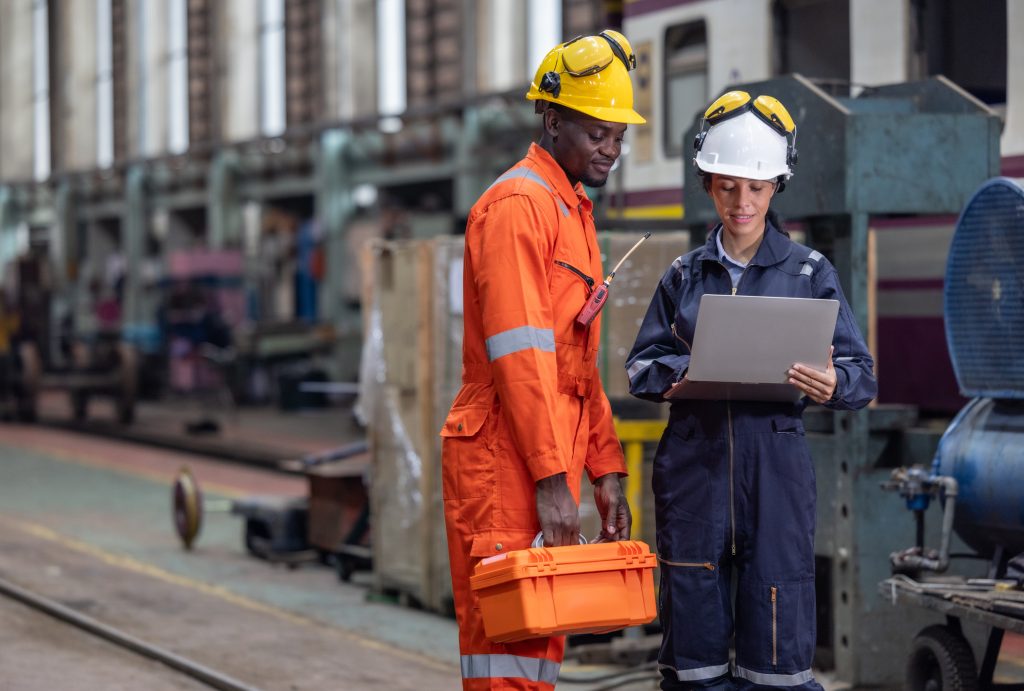
The effectiveness of occupational safety is not built solely on regulations, one-off training sessions, or isolated equipment. It is consolidated in the daily operations, in the way people perceive risks, make decisions, and interact with the work environment.
In industrial, logistics, and infrastructure operations, risks are part of the routine. However, the difference between a safe and a vulnerable environment lies in the ability to recognize early signs, act preventively, and keep safety as a living theme in daily life, not just as a formal requirement.
Making occupational safety more efficient requires a balanced combination of organizational culture, best practices, tools, indicators, and attention to the physical and emotional health of teams. When these elements work together, prevention ceases to be reactive and becomes a natural part of the operation.
Why occupational safety directly impacts business strategy
Maintaining effective occupational safety goes far beyond legal compliance. Organizations that address the issue in a structured way reap direct and measurable benefits.
Reducing accidents protects lives, but also preserves the company's reputation. Safe environments strengthen employee confidence, reduce absenteeism, and increase team engagement. With fewer operational interruptions, productivity increases and the costs associated with incidents decrease consistently.
Furthermore, companies with mature security practices tend to attract investors and partners more easily. Risk management is then seen as part of governance, not as an unavoidable cost.
How to create a safety culture in everyday life
The foundation of effective occupational safety lies in culture. Without it, any technology or procedure loses its impact over time.
A safety culture is built through frequent and accessible conversations about real risks. When the topic is part of everyday dialogue, workers begin to recognize dangers more naturally.
Talking about safety doesn't have to be bureaucratic. On the contrary, environments where people feel comfortable reporting unsafe situations, doubts, or near misses are able to act before serious events occur.
Another essential point is continuous training. Effective training connects standards to the reality of the field, explaining the rationale behind the rules and showing practical consequences. The more contextualized the content, the greater the adherence.
Transparency also strengthens the culture. Sharing data, incidents, and lessons learned demonstrates that the company recognizes real risks and is willing to evolve based on them.
Indicators and technology for faster decisions
To promote improvements and increase the efficiency of occupational safety, it is necessary to assess the quality of available information. A lack of reliable data or indicators can interfere with the effectiveness of initiatives by safety teams and managers.
Investment in technology allows for continuous data collection, pattern identification, and reduced time between risk identification and preventive action. Monitoring systems and integrated platforms broaden the understanding of what is happening in the field.
With structured data, decisions are no longer based solely on perception or informal history. The analysis begins to answer critical questions: where do deviations occur most frequently, at what times, under what conditions, and with what level of recurrence
Furthermore, technology adds an extra layer of immediate protection. With intelligent monitoring systems, for example, it is possible to rely on automatic alerts, visual or tactile, that allow for corrections the moment a risk arises, reducing the exclusive dependence on human reaction.
How to integrate culture and technology in practice
For culture and technology to work together, it is necessary to transform data into concrete actions.
Training should incorporate real-world operational information. In this case, instead of generic examples, the data indicates exactly where the critical points are, making the learning more relevant and effective.
Feedback also gains quality when it is based on evidence. Conversations based on facts reduce conflict, increase clarity, and strengthen shared responsibility.
Incentives for good practices help to consolidate safe behaviors. Recognizing teams and individuals who act preventively reinforces the message that safety matters, every day.
Another crucial factor is prioritizing investments. When leadership demonstrates, in practice, that safety is a priority, this vision is reflected in operations. Small, continuous improvements often generate significant impacts over time.
Occupational health beyond accident prevention
The effectiveness of occupational safety is not limited to preventing physical accidents. The emotional and mental health of workers directly influences operational risk.
Environments with high levels of stress, fatigue, or overload increase the likelihood of errors, distractions, and poor decisions. Furthermore, the recent update to NR-1reinforces the importance of considering psychosocial factors in safety management.
Simple policies make a difference. Adequate breaks, clear communication, a balance between demand and operational capacity, and access to psychological support all contribute to a safer and more productive environment.
Occupational safety as an ongoing process
Making occupational safety more efficient is a process, not a project with a beginning and an end. Therefore, it requires constant review of procedures, analysis of historical data, and adaptation to changes in operations.
The consistent use of indicators allows for the evaluation of what works, what needs adjustment, and where to focus efforts. Over time, the organization develops the maturity to act even at the near-miss level.
Thus, safety ceases to be merely a regulatory requirement and becomes increasingly integrated into the company's daily routine, guiding decisions, investments, and labor relations.
Conclusion
Efficiency in occupational safety stems from the combination of people, processes, and technology. When the culture encourages dialogue, data guides decisions, and worker health is prioritized, prevention happens naturally.
More than just preventing accidents, this model protects reputations, strengthens internal and external trust, and supports more resilient operations. In day-to-day practice, effective security is one that anticipates risks, learns from data, and evolves continuously.
About ALTAVE
ALTAVE offers intelligent monitoring solutions that enhance safety in critical operations, protecting people, assets, and processes. Combining cutting-edge technology with automated analysis, its solutions identify risk situations in real time, enabling proactive incident prevention.
With 24/7 monitoring, intuitive dashboards, and continuous technical support, ALTAVE contributes to operational safety and the protection of lives and essential resources in various sectors, such as Defense and Security, Energy, Mining, Ports, Agribusiness, and Oil and Gas.
Recognized for its strategic importance, ALTAVE is accredited as a Strategic Defense Company by the Brazilian Ministry of Defense, and is also a supplier to Petrobras.
Let's have a chat?
Contact us and find out how we can help your company.