On October 20, 2025, Ibama (Brazilian Institute of Environment and Renewable Natural Resources) authorized the drilling of the first exploratory oil well on the Equatorial Margin, a historic milestone for the national energy sector. Located north of Amapá, about 175 km from the coast and near the mouth of the Amazon River, the area combines economic potential and environmental sensitivity.
The license authorizes the exploratory drilling phase and represents a fundamental step forward for Brazil to investigate the potential of billions of barrels of oil in the area. The expectation is that, if the reserves are confirmed, the country could make a significant leap in its production capacity, with major economic and social impacts for the entire North and Northeast regions.
The Brazilian Equatorial Margin is emerging as one of the world's most promising regions for oil exploration, with potential reinforced by recent discoveries in neighboring countries such as Guyana and Suriname, where reserves of billions of barrels have been found. The impact was so great that Guyana's GDP grew by 43% in 2024, highlighting the transformative power of these deposits. In the Brazilian case, an estimated 5.1 billion barrels are recoverable, potentially increasing national proven reserves by more than 50%.
Step 1: Seismic studies
The process begins with a meticulous investigation phase. Ships equipped with cables and sonar are sent to map the ocean floor. These devices emit waves that travel through the layers of land and water, returning data that form images of what lies beneath the seabed. Geologists interpret this data by performing a kind of "tomography" of the soil, which allows them to anticipate areas with a higher probability of oil presence.
This step has already been completed on the Equatorial Margin, and is essential for directing company resources and regulatory planning. In addition to conventional seismic technology, advanced algorithms are now used to cross-reference data, reduce uncertainties, and identify areas with potential for mineral deposits.
Stage 2: Exploratory drilling
With the location defined, exploratory drilling begins. Petrobras, for example, invested US$3 billion in its strategic plan to drill 15 wells on the Equatorial Margin between 2025 and 2029. The equipment used is extremely sophisticated and, in the final stage, can employ diamond drill bits to penetrate complex rock formations, reaching depths of almost 6,000 meters.
The operation takes place in deep waters far from the coast. For comparison, the well at the mouth of the Amazon River is further from the coast of Amapá than most conventional operations. An additional challenge is that the entire support structure needs to be adapted to the risks and logistical difficulties of operating far from land.
It is important to highlight that in this initial phase there is no commercial production of oil and gas. The priority is to collect geological information to assess whether there are viable reserves, carrying out formation tests and sampling, as well as continuous operational monitoring, with periodic inspections and preventive and corrective maintenance plans.
Evaluation of results and sizing of reserves.
If reserves and economic viability are confirmed, the next phase will be to assess the productive potential of the deposit. New wells may be drilled to obtain more detailed samples, and tests are carried out to evaluate reservoir characteristics such as permeability and porosity.
Technical reports, including environmental assessments, economic projections, and development plans, are then sent to the ANP (National Petroleum Agency) and Ibama. This step precedes the licensing process for commercial production, which requires a more in-depth environmental assessment, considering production systems, floating platforms, FPSOs, and new requirements for mitigating environmental impacts.
Environmental challenges and Ibama's requirements
To authorize exploratory activity in the Equatorial Margin, Ibama conducted an evaluation process that included technical studies, sectorial meetings, and public hearings in the states of Pará and Amapá, as well as on-site inspections of emergency response structures.
The Environmental Impact Study (EIA/RIMA) addressed not only drilling techniques, but also specific contingency plans for each possible scenario. Among the requirements are:
Spill simulations: To predict and plan actions in case of an accident, studying ocean currents and potential dispersion paths.
Rescue structure: Implementation of Wildlife Rehabilitation and De-oiling Centers, with trained teams and infrastructure ready for service.
Immediate response plan: Petrobras presented a robust emergency response structure, with resources distributed among maritime units and land-based bases.
Communication and social engagement: Need to inform and engage with indigenous communities, fishermen, and riverside populations, detailing impacts and mitigation measures.
Technological advances and challenges
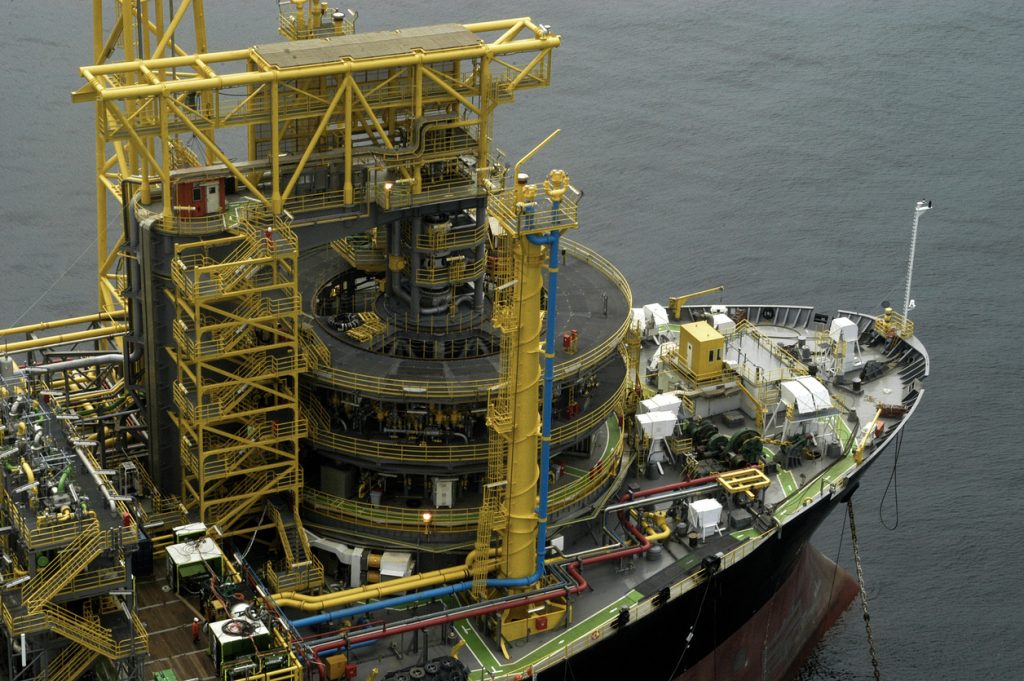
Brazil has built an international reputation for developing technologies for deep and ultra-deep water exploration, such as in the pre-salt fields. However, the Equatorial Margin presents unique characteristics that demand additional innovations. A key point is the distance of the wells from the coast, which requires sophisticated floating production, storage and offloading (FPSO) vessels, 24-hour monitoring, and enhanced safety protocols.
The drilling process, even in the exploratory phase, is fully monitored by remote and offshore teams, who operate with inspections, maintenance, and regular personnel training, seeking to prevent accidents and contain leaks in record time. Petrobras emphasizes that the entire operation, from planning to execution, is audited by IBAMA (Brazilian Institute of Environment and Renewable Natural Resources) and meets international environmental safety standards.
Expected results and future projections
According to estimates by ANP and EPE (Energy Research Company), the Equatorial Margin could guarantee up to 5 million barrels of oil per day by 2030, which would place Brazil among the world's largest producers, alongside the United States, Russia, and Saudi Arabia.
This progress is expected to accelerate the development of the Northern and Northeastern states, generating jobs, taxes, and stimulating local production chains.
Intelligent monitoring: combining technology with environmental protection.
After emphasizing the technical and environmental aspects, it becomes possible to understand the value of continuous monitoring as an ally in the exploration of the Equatorial Margin. In this context, the use of new technologies becomes an additional resource to support security and operations teams, increasing the ability to track variables in real time.
Intelligent monitoring solutions, for example, combine high-precision cameras, continuous analysis, and artificial intelligence, allowing for the rapid identification of any deviations, such as oil spills at sea, and the activation of protocols in an agile and organized manner.
Adopting this type of monitoring also helps improve already established procedures. By recording the detections and alerts generated, intelligent monitoring systems gather information that can be used in audits and reviews of internal processes.
Conclusion
The Equatorial Margin represents a transformative opportunity for Brazil: to grow with energy, innovation, and sustainability. Hence the importance of considering that, in modern times, technology plays the role of ensuring that this progress is safe for people and the environment.
Responsible exploration requires detailed studies, refined techniques, dialogue with communities and regulators, and, above all, technological integration as a complement to the environmental protocols already required by national legislation. It is this union of knowledge, care, and innovation that can make the Equatorial Margin a global model of sustainable development, where economic progress and environmental responsibility go hand in hand.
About ALTAVE
ALTAVE offers intelligent monitoring solutions that enhance safety in critical operations, protecting people, assets, and processes. Combining cutting-edge technology with automated analysis, its solutions identify risk situations in real time, enabling proactive incident prevention.
With 24/7 monitoring, intuitive dashboards, and continuous technical support, ALTAVE contributes to operational safety and the protection of lives and essential resources in various sectors, such as Defense and Security, Energy, Mining, Ports, Agribusiness, and Oil and Gas.
Recognized for its strategic importance, ALTAVE is accredited as a Strategic Defense Company by the Brazilian Ministry of Defense, and is also a supplier to Petrobras.
Let's talk?
Contact us and find out how we can help your company.
Sources:O Globo, Agência Brasil, Globo.com, Ministério de Minas e Energia,CNN Brasil, Petrobras,Study Environmental and Ibama