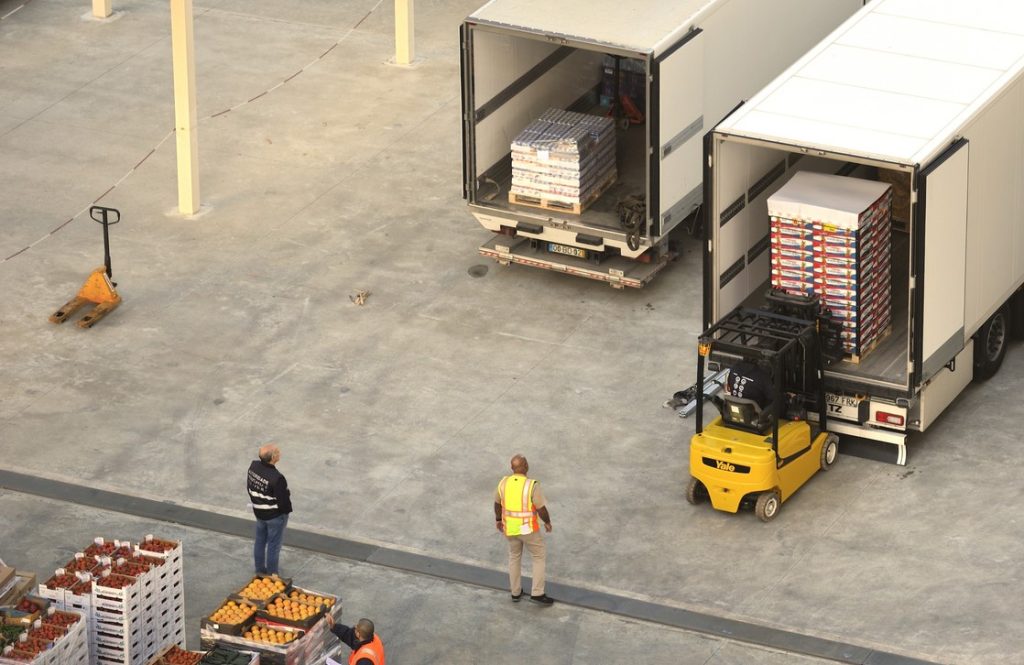
Behavioral deviations in logistics yards go far beyond simple oversights: they are one of the main factors that compromise worker safety, operational efficiency, and the financial health of companies.
Understanding these deviations, their causes and consequences is fundamental for managers to act strategically and preventively, making logistics environments safer and more productive.
In this article, you will learn about deviations that impact safety and the reasons that lead to these behaviors.
What are behavioral deviations?
Also known as unsafe acts, behavioral deviations are actions or decisions that contradict the safety standards and procedures established for the work environment. In logistics yards, where the movement of heavy equipment and pedestrians occurs simultaneously, these deviations can generate serious risk situations, with the potential for accidents and fatalities. They arise from different types of human errors that manifest themselves in daily operations.
One of the most common categories is skill-based error, which occurs when a routine task is performed incorrectly due to distractions or momentary lapses. For example, an operator who becomes distracted while adjusting their personal protective equipment (PPE) and loses focus while driving a forklift.
Another very common type is decision errors, which occur when a choice is made based on inadequate judgment or lack of knowledge, such as ignoring operational paths and routes to save time. There are also perception errors, which arise when a worker misinterprets visual or auditory signals, such as failing to notice an alarm due to environmental conditions, which compromises their reaction to imminent risks.
Risky behaviors and factors that motivate deviations
Several everyday actions in logistics yards can put lives in danger and are generally linked to well-defined causes, such as haste, negligence, or ignorance of regulations.
One example is the circulation of people outside designated pedestrian areas: when employees walk through vehicle traffic zones, such as those used by forklifts and tractors, they create avoidable exposure points, often motivated by shortcuts along the route or the false sense that "nothing will happen."
This same overconfidence appears in the operation of mobile equipment, where a momentary lapse in attention (when adjusting PPE, checking documents, or quickly talking to another employee) opens windows of risk in tasks that should be fully focused.
Another recurring behavior is the disregard for established operational routes for maneuvers, especially at low speeds. In an attempt to save time, operators may adopt unplanned alternative routes, significantly increasing the potential for collisions and incidents with pedestrians and structures.
In parallel, there are situations in which critical activities are performed without the minimum recommended distance between people and machines, resulting from pressure for productivity, inadequate organization of space, or failures in supervision.
Added to this are actions such as working at heights without adequate protection, performing tasks hastily, or ignoring safety signs and warnings, often associated with fatigue, stress, lack of knowledge of the rules, or the mistaken idea that the professional's experience is sufficient to "compensate" for the risk.
These behaviors don't arise by chance: they are a direct consequence of human and organizational factors. Recognizing both the risky behaviors and the causes that motivate them is an important step for any company that wants to address safety strategically, integrating management practices, training, and continuous monitoring to reduce the likelihood of accidents.

Consequences for companies and employees
The negative effects stemming from behavioral deviations can be diverse and occur at different levels. The first, and most serious, impact is on the safety and integrity of employees. Injuries, temporary or permanent disabilities, and even fatalities can be avoided by eliminating these deviations.
Furthermore, productivity suffers directly. Accidents cause emergency shutdowns, delivery delays, and increased equipment downtime. This interferes with the logistics flow and impacts the supply chain as a whole.
The associated financial costs are significant. They include medical expenses, compensation, fines for non-compliance with Regulatory Standards, such as NR-11 and NR-12, which deal with safety in machinery and equipment. Not to mention the damage to the company's reputation with clients, partners, and the market.
Finally, team morale is also affected: an unsafe work environment generates fear, anxiety, and low motivation, leading to higher turnover and difficulties in attracting and retaining talent.
Comprehensive solutions to minimize behavioral deviations
Although many deviations are linked to individual conduct, they can be reduced through company actions. The starting point is continuous investment in regular training, which not only emphasizes rules and procedures but also explains the risks in a practical and contextualized way.
Implementing efficient feedback mechanisms is also crucial. Through direct observation and monitoring, deviations can be quickly identified and corrected, in addition to providing positive reinforcement for good practices.
Incentives act as motivators, rewarding teams and individuals who adopt safe and collaborative behaviors. At the same time, team integration through daily safety dialogues is a well-established practice that increases collective awareness of risks.
Tools to aid in prevention
Equipment such as strategically positioned convex mirrors in blind spots increases visibility, preventing collisions between vehicles and people. Customized floor markings guide operational routes, ensuring that routes are respected and facilitating an orderly flow in the yard. In addition, continuous audible and visual alarms help maintain everyone's constant attention in the environment, reducing distractions that are often the gateway to accidents.
Technology also stands out as an ally in preventing behavioral deviations and mitigating risks in logistics yards. Advanced monitoring solutions provide real-time alerts, allowing preventive actions to be taken before incidents occur, protecting both operators and pedestrians.
Another important aspect of the technology is the ability to collect and analyze data in an automated way. This detailed analysis allows for the identification of risky behavior patterns, providing information for the development of specific training programs and customized corrective actions.
The ALTAVE solution and security in logistics yards
Among the innovations in intelligent monitoring, dynamic monitoring of red zones. This technology detects in real time the presence of people in risk areas, such as around a forklift, issuing immediate alerts to prevent collisions and run-overs.
This allows behaviors such as circulating outside designated areas and failing to follow operational routes to be promptly identified and corrected, drastically reducing risk windows.
Conclusion
Investing in employee awareness, continuous training, and the adoption of effective tools is fundamental to transforming logistics yards into safer and more productive work environments. These actions contribute to reducing behavioral deviations, decreasing the risk of accidents, and preserving the physical integrity of workers.
By prioritizing prevention and modernizing processes with intelligent technological solutions, companies ensure business continuity while protecting lives and reputations. This integrated approach promotes a cycle of continuous improvement, increasing operational efficiency and strengthening the safety culture throughout the organization.
About ALTAVE
ALTAVE offers intelligent monitoring solutions that enhance safety in critical operations, protecting people, assets, and processes. Combining cutting-edge technology with automated analysis, its solutions identify risk situations in real time, enabling proactive incident prevention.
With 24/7 monitoring, intuitive dashboards, and continuous technical support, ALTAVE contributes to operational safety and the protection of lives and essential resources in various sectors, such as Defense and Security, Energy, Mining, Ports, Agribusiness, and Oil and Gas.
Recognized for its strategic importance, ALTAVE is accredited as a Strategic Defense Company by the Brazilian Ministry of Defense, and is also a supplier to Petrobras.
Let's have a chat?
Contact us and find out how we can help your company.