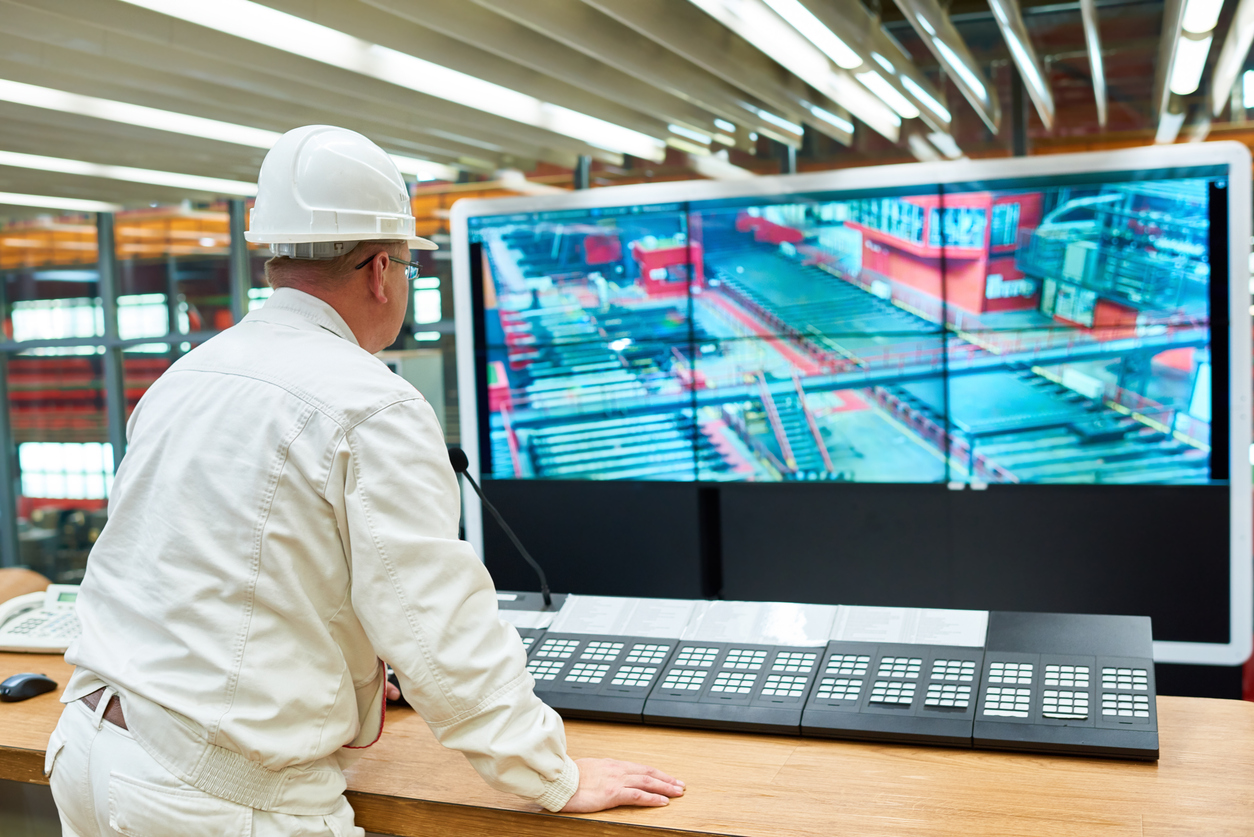
Digital transformation has significantly expanded access to technologies focused on operational safety. Intelligent sensors, cameras with automated analysis, wearables, analytical platforms, and remote monitoring systems have become part of the routine of industrial operations in various sectors. These tools offer greater visibility, detection capabilities, and continuous data generation.
This technological advancement has brought significant gains, but it has also created a misconception: that simply acquiring new solutions is enough to reduce risks. In practice, organizations can invest in highly sophisticated systems and still not see consistent improvements in their safety indicators.
The reason is that technology, by itself, does not transform operations. To generate concrete results, it needs to be integrated into processes, adopted by teams, and supported by a governance structure capable of transforming data into decisions. This article explores why more technology does not automatically mean more safety and what factors truly determine the success of these initiatives.
You will learn about:
- The myth that technology alone can solve problems;
- The role of process integration;
- The impact of organizational maturity and security culture;
- How to turn information into intelligence through data governance;
- Signs that technology is not generating value;
- How to increase the effectiveness of technology in operational safety;
- The role of artificial intelligence in the evolution of safety.
The myth that technology alone can solve problems;
It is common to associate technological innovation with the immediate solution of operational challenges. Whenever a new tool based on artificial intelligence, automation, or advanced data analytics emerges, expectations grow that its adoption will automatically lead to improvements in safety and efficiency.
However, many initiatives fail not because of technological limitations, but because of a lack of appropriate organizational context. When systems are implemented without clear objectives, without integration into the operational flow, and without defined responsibilities, the impact tends to be limited.
Technology enhances observation, analysis, and response capabilities, but it does not replace structured processes, leadership, and operational discipline. In safety, the best results emerge when tools reinforce practices already aligned with a consistent risk management strategy.
The role of process integration;
To generate real value, technology needs to be integrated into operational routines. Alerts, dashboards, and analyses only produce results when they trigger concrete actions, with clearly defined responsibilities and well-established response protocols.
This requires updated processes, escalation criteria, consistent procedures, and integration with systems already used by the organization. When a tool operates in isolation, without integration into existing processes, it tends to generate information that does not translate into practical decisions.
Integration with processes is also essential for team adoption. The more natural the incorporation of technology into daily life, the greater the likelihood of consistent and effective use. Operational safety depends on the ability to transform information into action at the right time.
Organizational maturity and safety culture
Organizational maturity reflects the degree of discipline with which a company identifies, analyzes, and addresses risks. More mature organizations use data to support decisions, continuously review their processes, and treat deviations as learning opportunities.
In this context, safety culture plays a decisive role. When leaders and teams share a genuine commitment to prevention, technologies tend to be incorporated more consistently and productively. The tool ceases to be seen as an obligation and begins to be perceived as support for operational performance.
On the other hand, in environments where safety is still treated reactively, even advanced solutions may have low adoption. Technology enhances the existing level of maturity, but it does not replace building a culture oriented towards continuous improvement.
Data governance: turning information into intelligence
Current technologies generate a large volume of operational data. Images, logs, historical data, events, and indicators are continuously produced, creating a highly valuable informational asset.
The value of data lies not only in its quantity. When we talk about operational safety, it's also necessary to consider its quality, organization, and, above all, its strategic use. Without integrity, traceability, standardization, and accessibility, information tends to remain scattered and underutilized.
Data governance establishes criteria to ensure that information is reliable and useful for decision-making. When well-structured, it transforms data into operational intelligence, strengthens audits, improves investigations, and supports more consistent risk management decisions.
Signs that technology is not generating value
Some signs clearly indicate that the technology is not yet delivering the expected impact. One of the most common is the excessive number of alerts without proper prioritization, which makes it difficult to identify truly critical events.
Another important sign is the low utilization of tools by the teams. When operators and supervisors rely predominantly on individual perception, instead of using the available resources, this suggests that the solution is not integrated into the operational workflow.
Also worthy of attention are the difficulty in verifying concrete results, the existence of scattered data in non-integrated systems, and the absence of clear indicators to monitor progress. In these situations, the organization may be accumulating technology without converting information into effective improvement.
How to increase the effectiveness of technology in operational safety
The first step is to define clear and measurable objectives. Before implementing any solution, it is essential to establish which risks will be addressed, which indicators will be monitored, and what results are expected to be achieved.
It's also important to prioritize use cases with significant operational impact. Initiatives focused on solving concrete problems tend to generate value more quickly and are easier for teams to adopt.
Effectiveness increases when technology is integrated into processes, accompanied by adequate training and supported by consistent data governance. Periodic reviews of parameters, flows, and results ensure that the solution evolves along with the needs of the operation.
The role of artificial intelligence in the evolution of safety
Artificial intelligence significantly expands the potential of safety technologies. It allows filtering large volumes of data, prioritizing alerts, identifying patterns, and automating repetitive monitoring tasks.
However, its value depends directly on the quality of the data and the operational design in which it is embedded. Sophisticated algorithms do not produce reliable results when fed inconsistent information or disconnected from decision-making processes.
AI does not replace processes or governance. Its role is to enhance the organization's analytical capabilities and support faster and more accurate decisions. When applied in a structured way, it becomes an important accelerator of operational maturity.
Conclusion
More technology doesn't automatically mean more security. Advanced tools can enhance visibility and analytical capabilities, but consistent results depend on integration with processes, organizational maturity, and data governance.
Organizations that achieve the greatest return are those that use technology as a tool for learning and continuous improvement. Instead of accumulating systems, they build an operational architecture capable of transforming information into safer decisions.
The final question is simple: is your operation merely adding new tools, or is it using technology in a structured way to strengthen risk management? The real difference lies not in having more resources, but in using them with clarity, discipline, and strategic purpose.
About ALTAVE
ALTAVE offers intelligent monitoring solutions that increase safety in critical operations, protecting people, assets, and processes. By combining cutting-edge technology with automated analysis, it is possible to identify risk situations in real time and prevent accidents before they happen.
With real-time monitoring, intuitive dashboards, and 24/7 support, ALTAVE contributes to operational safety and the protection of lives and essential resources. The company has patented technologies in Brazil and abroad, and is present in various regions of the world, serving sectors such as Defense and Security, Energy, Mining, Ports, Agribusiness, and Oil and Gas.
Recognized for its strategic relevance, ALTAVE is accredited as a Strategic Defense Company by the Brazilian Ministry of Defense and a supplier to Petrobras.
Let's have a chat?
Contact us and learn more about how ALTAVE solutions can support your operation!