Forklifts are among the most widely used pieces of equipment in industrial operations, logistics centers, warehouses, ports, and cargo terminals. Their ability to move large volumes of materials quickly contributes directly to operational productivity. At the same time, their constant presence in environments shared by people, vehicles, and cargo creates scenarios that demand constant attention to safety.
Many of the risks associated with forklifts stem not only from the equipment itself but from the interaction between moving machinery and workers sharing the same operational space. Run-overs, collisions, crushing incidents, and impacts involving loads are among the events that can have severe consequences for people, assets, and operational continuity.
For this reason, forklift safety is a recurring theme in national regulations and international technical standards. In Brazil, requirements are primarily distributed across NR-11, NR-12, and NR-17, while international references such as ISO 3691-4 complement best practices for risk management involving industrial vehicles.
In this article, we will explore how these regulations relate to forklift operations, the key challenges encountered in shared areas, and how smart monitoring technologies can help enhance the protection of workers and assets in critical operations. You will find the following topics:
- Why forklift operations require special attention;
- NR-11 requirements;
- How NR-12 addresses danger zones;
- The role of NR-17;
- What ISO 3691-4 adds;
- The challenge of dynamic danger zones;
- How smart monitoring strengthens security;
- Far beyond regulatory compliance.
Dynamic safety: the challenge of forklifts in complex environments
Material handling is essential to the industry, but forklift operations present unique challenges.
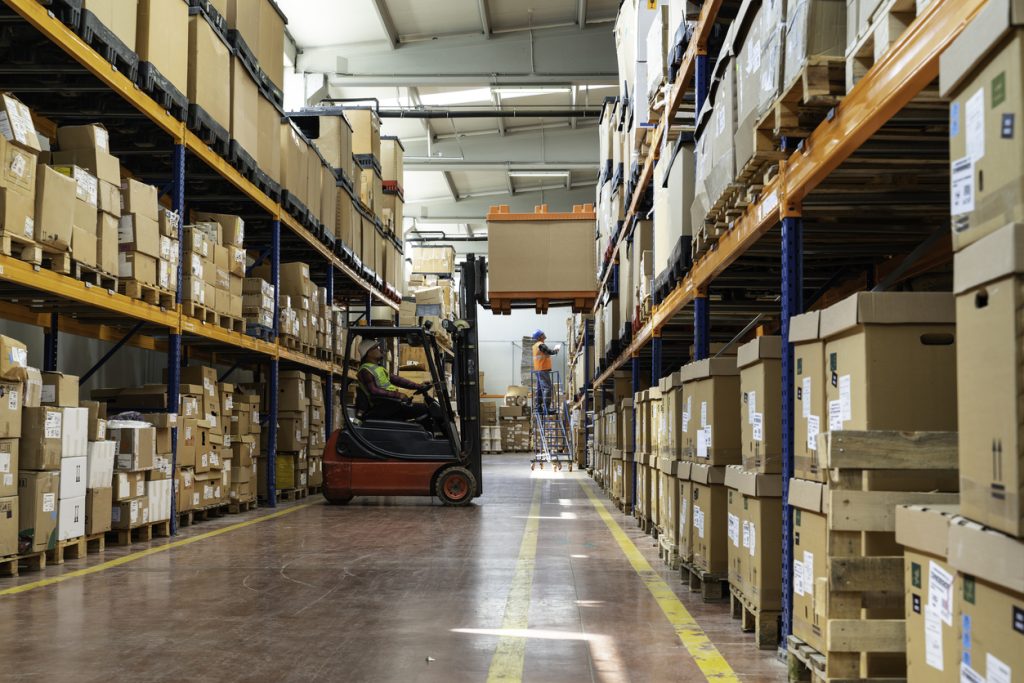
Unlike stationary machinery, a forklift's danger zone moves with the vehicle, making the risk highly variable: an aisle that is safe one moment can become hazardous the next due to maneuvering or load movement.
In complex operational environments with multiple teams and frequent crossings, static procedures and traditional signage are often insufficient. Factors such as blind spots, environmental noise and pressure for productivity increase the likelihood of inappropriate approaches.
This dynamic requires a safety management approach that keeps pace with operations, moving beyond models based solely on individual behavior. Understanding the fluid nature of risk is essential to interpreting modern safety standards, where an organization's ability to continuously monitor these exposures in real time becomes the true differentiator in preventing accidents.
What NR-11 mandates for forklift operations
NR-11 establishes requirements regarding the transport, movement, storage, and handling of materials. Among the equipment covered by the standard are forklifts, which must be designed, constructed, operated, and maintained in a manner that ensures adequate safety conditions for workers.
Although the standard predates the widespread adoption of digital monitoring technologies, its principles remain relevant by emphasizing aspects fundamental to accident prevention.
Training and qualification of operators
NR-11 mandates that operators of motorized transport equipment receive specific training provided by the company to qualify them to perform their duties safely.
Furthermore, operators must be certified and carry identification while performing their duties, reinforcing the need for formal qualification to operate this equipment.
Proper training helps the operator understand the risks involved in load handling, the equipment's operational limits, and the procedures necessary to reduce exposure to hazardous situations.
Equipment inspection and maintenance
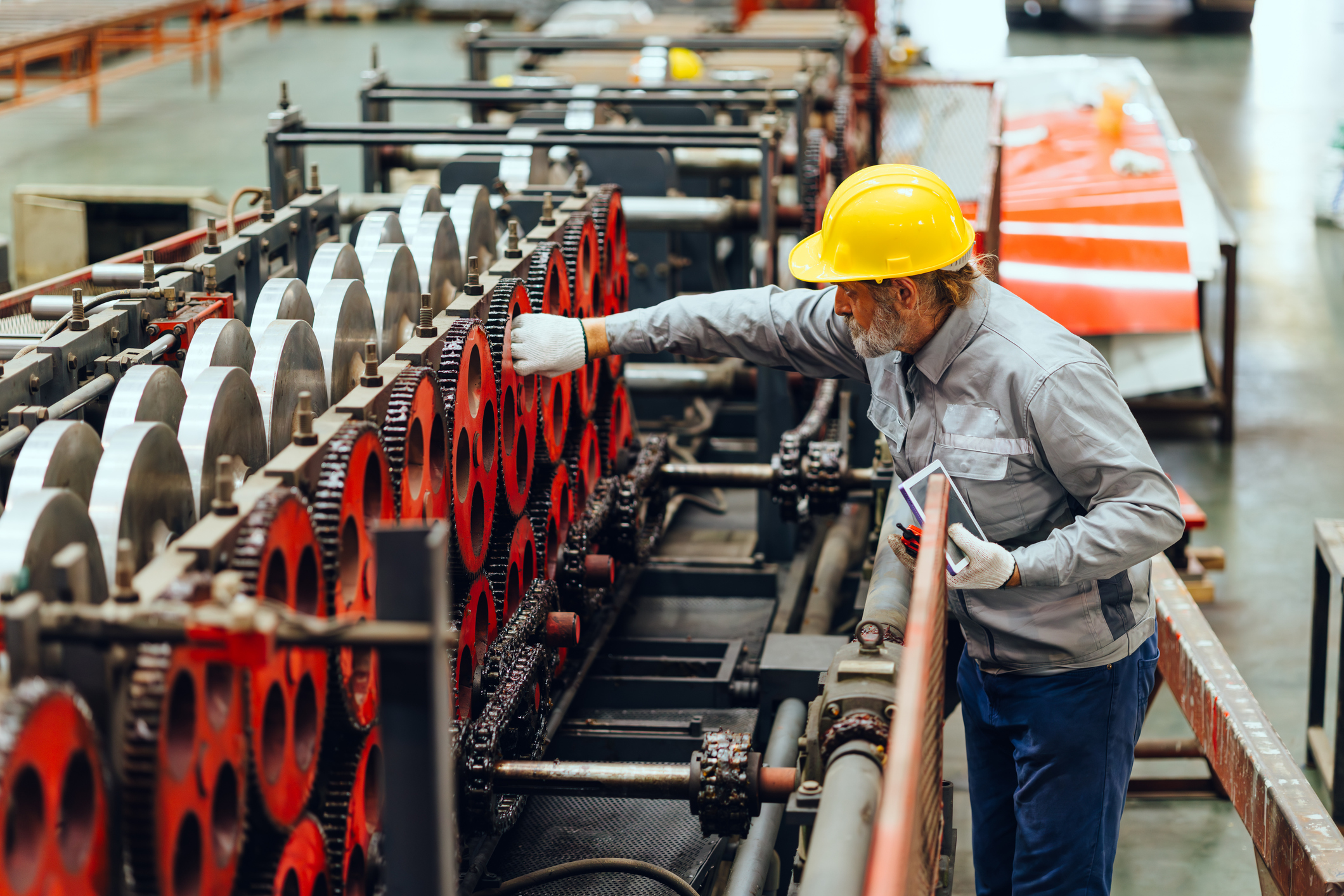
Another important point addressed by NR-11 is the need for continuous inspection of equipment used for material handling. Components that are defective or exhibit any type of deficiency must be replaced immediately.
This requirement reinforces the importance of structured preventive maintenance programs capable of identifying failures before they compromise operational safety.
Beyond mechanical integrity, the forklift's operational reliability directly influences the ability to perform safe maneuvers, maintain stability while transporting loads, and respond appropriately to operator inputs.
Safety communication and signage
The standard also requires motorized transport equipment to be equipped with an audible warning signal, such as a horn.
Although simple, this requirement highlights an important principle: safety in forklift operations depends on effective communication between the equipment and the workers sharing the workspace.
In more complex operations, this concept evolves into visual warning systems, proximity monitoring, and mechanisms capable of identifying risk situations before they result in incidents.
How NR-12 addresses danger zones in machinery and equipment
While NR-11 establishes guidelines for the handling and transport of materials, NR-12 delves deeper into worker protection against risks posed by machinery and equipment. Although the standard is frequently associated with stationary equipment, its principles are highly relevant to forklift operations, particularly when considering the concept of danger zones.
The concept of a “danger zone” appears repeatedly throughout NR-12, reinforcing the importance of identifying areas where there is a potential for injury resulting from the operation of machinery and equipment. The logic behind the standard is simple: whenever an area poses a risk to workers, protective measures commensurate with the level of exposure must be in place.
This approach is particularly relevant for environments where people and mobile equipment share the same space. After all, the risk lies not only in the equipment itself but also in the interaction between the equipment, the environment, and the people moving around it.
What NR-12 requires for worker protection
The standard establishes that the employer must adopt protective measures capable of safeguarding the health and physical integrity of workers during the operation of machinery and equipment.
Item 12.1.7 stipulates that these measures must be capable of effectively protecting workers against the risks inherent in the activity. This guideline reinforces that the mere existence of procedures is insufficient when exposure to risk remains present.
Another important point is found in item 12.1.9.1, which establishes that safety systems must take into account the technical characteristics of the machine, the work process, and the available technological alternatives to achieve the required level of protection.
This means that the choice of controls must take operational realities into account. In scenarios where risk is dynamic and constantly shifting, protective measures must also be capable of keeping pace with this dynamic.
Complementing this approach, item 12.5.1 mandates that hazard zones be equipped with safety systems designed to protect the health and physical integrity of workers. Although the standard cites fixed guards, movable guards, and interlocking safety devices, the core principle remains the same: to prevent or reduce human exposure to risk areas.
How the “danger zone” concept applies to forklifts
On a stationary machine, the danger zone typically remains in the same location. Physical barriers, guards, or enclosure systems can clearly delineate the protected area.
With forklifts, however, the scenario is different. The danger zone moves along with the equipment and constantly changes position throughout the operation.
A maneuver, a change in direction, or the transport of a load instantly alters the configuration of the exposed area. This makes protection more challenging and requires approaches capable of keeping pace with the operation's dynamics in real time.
For this reason, many organizations have been evolving from models based exclusively on static signage to solutions that continuously monitor the interaction between people and mobile equipment.
NR-17: the human factor is also part of safety
When discussing forklift safety, attention often focuses exclusively on the equipment. However, a significant portion of the risks is related to the human factors that influence the operation.
NR-17 addresses working conditions and ergonomic aspects that can impact worker performance. Although it is not a specific standard for forklifts, its principles help to understand how... fadiga, atenção, organização do trabalho e carga mental influenciam a segurança operacional.
In logistics and industrial environments, operators often work under pressure for productivity, live with multiple simultaneous demands and need to make quick decisions in shared spaces. These factors can increase the likelihood of errors and reduce the ability to perceive risky situations.
Fatigue and operational attention
Safely operating a forklift requires constant attention to the surroundings. The operator must simultaneously monitor people, obstacles, loads, intersections, floor conditions, and the movement of other equipment.
Over the course of a shift, this accumulated cognitive effort can impair reaction times and increase the likelihood of poor decisions. In areas with high operational activity, even minor distractions can lead to dangerous close encounters or risky maneuvers.
Therefore, safety does not depend solely on the mechanical condition of the forklift. It is also related to how the work is organized and the ability of individuals to maintain an adequate level of attention while performing their tasks.
Safety beyond regulatory compliance
NR-17 reinforces that accident prevention depends on understanding the human factors involved in the operation. An adequately marked area still presents a risk if workers are exposed to adverse conditions.
This demonstrates that risk management must simultaneously consider people, processes, and technology. None of these elements, in isolation, is capable of ensuring high levels of protection.
What ISO 3691-4 adds to forklift operations
In addition to Brazilian regulations, forklift operations can also benefit from the guidelines set out in ISO 3691-4, an international standard addressing the safety of self-propelled industrial trucks.
The standard addresses requirements related to risk assessment, the integration of people and equipment, operating conditions, and protective measures designed to reduce exposure to hazardous situations.
The focus is less on incident response and more on prevention. The risk-based approach seeks to identify, in advance, conditions capable of causing accidents and to implement appropriate controls before unwanted events occur.
The importance of segregating people and equipment
One of the most relevant principles found in international best practices is the need to reduce hazardous interactions between workers and industrial vehicles.
Whenever possible, physical segregation between areas for pedestrian traffic and areas for equipment traffic is recommended. However, in many operational environments, such complete separation is not feasible due to the nature of the activities.
In such cases, it becomes necessary to use complementary mechanisms capable of identifying situations of unsafe proximity and enabling rapid responses before a collision or pedestrian accident occurs.
A global trend toward risk-based prevention
Both national standards and international references converge in the same direction: safety must be built through the continuous identification of risks and the adoption of measures proportionate to the existing exposure.
This explains the growing adoption of technologies capable of monitoring critical areas in real time and generating automatic alerts when risk situations are detected.
The challenge of dynamic danger zones;
Managing danger zones in forklift operations presents a challenge not found in many other industrial activities: the hazard moves along with the equipment.
Traditionally, organizations use measures such as floor markings, physical barriers, warning signs, and operational procedures to reduce worker exposure. These controls remain important but have limitations when applied to highly dynamic environments.
A line painted on the floor always remains in the same place. A forklift, however, can travel across different areas of the operation within a few minutes, continuously shifting the location of the hazard.
As a result, the effectiveness of exclusively static controls may diminish as operations become more dynamic and complex.
It is in this context that the concept of arises. as red zone management dynamics
How smart monitoring enhances forklift safety
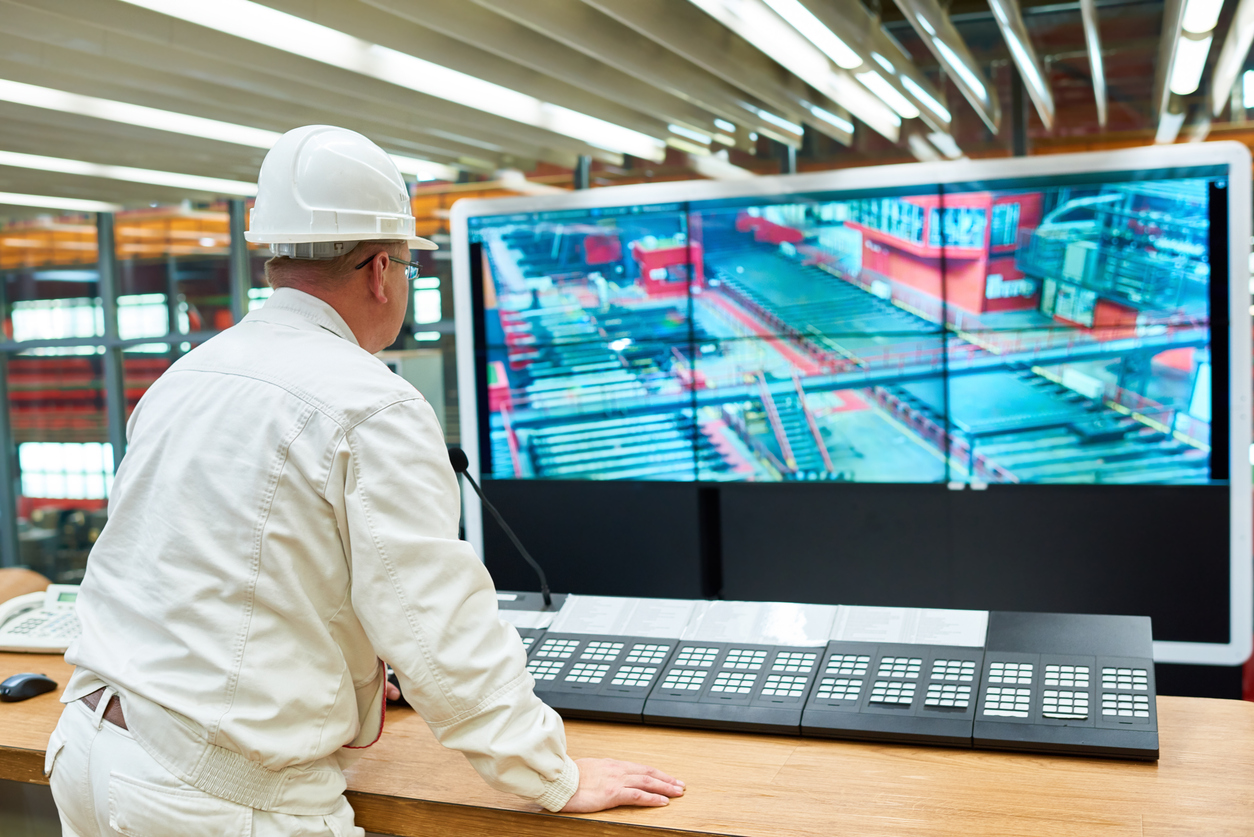
The concept of a dynamic red zone is based on a simple premise: if the danger zone moves along with the equipment, the monitoring system must also be capable of tracking it in real time.
The ALTAVE HARPIA uses computer vision to automatically identify equipment movement, recognize its danger radius, and continuously monitor for the presence of people in protected areas.
Unlike traditional restricted areas, which remain fixed, the protection zone automatically adjusts as the forklift moves. This allows the danger zone to keep pace with operational realities in real time.
Automatic detection of unauthorized approaches
When a person enters or approaches the monitored zone, the system can generate automatic alerts to enable immediate corrective actions.
This continuous monitoring enhances the ability to identify risk situations before they escalate into incidents, strengthening the preventive barriers in place within the operation.
Furthermore, integration with ALTAVE Buddy enables notifications to be sent directly to workers exposed to risk, enhancing their situational awareness and reducing response time.
Data transformed into operational intelligence.
Another key differentiator is the ability to transform operational events into structured information for risk management.
The generated alerts are recorded on the HARPIA platform, enabling auditing, traceability, and subsequent analysis of the incidents.
Furthermore, the system generates automated reports with indicators related to "red zone" activation frequency, equipment movement patterns, and duration of exposure to risk. This information helps identify trends and opportunities for continuous improvement.
Forklift safety requires more than compliance.
Meeting the requirements of NR-11, NR-12, and NR-17, as well as international best practices, is an important step toward enhancing safety in forklift operations. However, regulatory compliance alone does not eliminate the risks present in shared environments.
The dynamics of these operations require an approach capable of keeping pace with constant changes, identifying dangerous close-proximity situations, and providing information that supports faster and more accurate decisions.
In this context, smart monitoring technologies emerge as key allies in transforming regulatory requirements into continuous preventive actions. By combining people, processes, and technology, organizations can enhance their ability to protect workers, reduce risk exposure, and strengthen operational reliability.
Beyond merely meeting regulatory requirements, the current challenge lies in building operations capable of monitoring the dynamics of risks within the industrial environment in real time—ensuring that safety keeps pace with the speed and complexity of operations. It is precisely here that the evolution of monitoring tools plays an increasingly important role.
About ALTAVE
ALTAVE offers intelligent monitoring solutions that enhance safety in critical operations, protecting people, assets, and processes. By combining cutting-edge technology with automated analysis, it is possible to identify risk situations in real time, reduce exposure, and support faster responses to critical events.
With real-time monitoring, intuitive dashboards, and 24/7 support, ALTAVE contributes to operational safety and the protection of lives and essential resources. The company has patented technologies in Brazil and abroad, and is present in various regions of the world, serving sectors such as Defense and Security, Energy, Mining, Ports, Agribusiness, and Oil and Gas.
Recognized for its strategic relevance, ALTAVE is accredited as a Strategic Defense Company by the Brazilian Ministry of Defense and a supplier to Petrobras.
Let's have a chat?
Contact us to learn more about how our solutions can support the evolution of your operation's security!